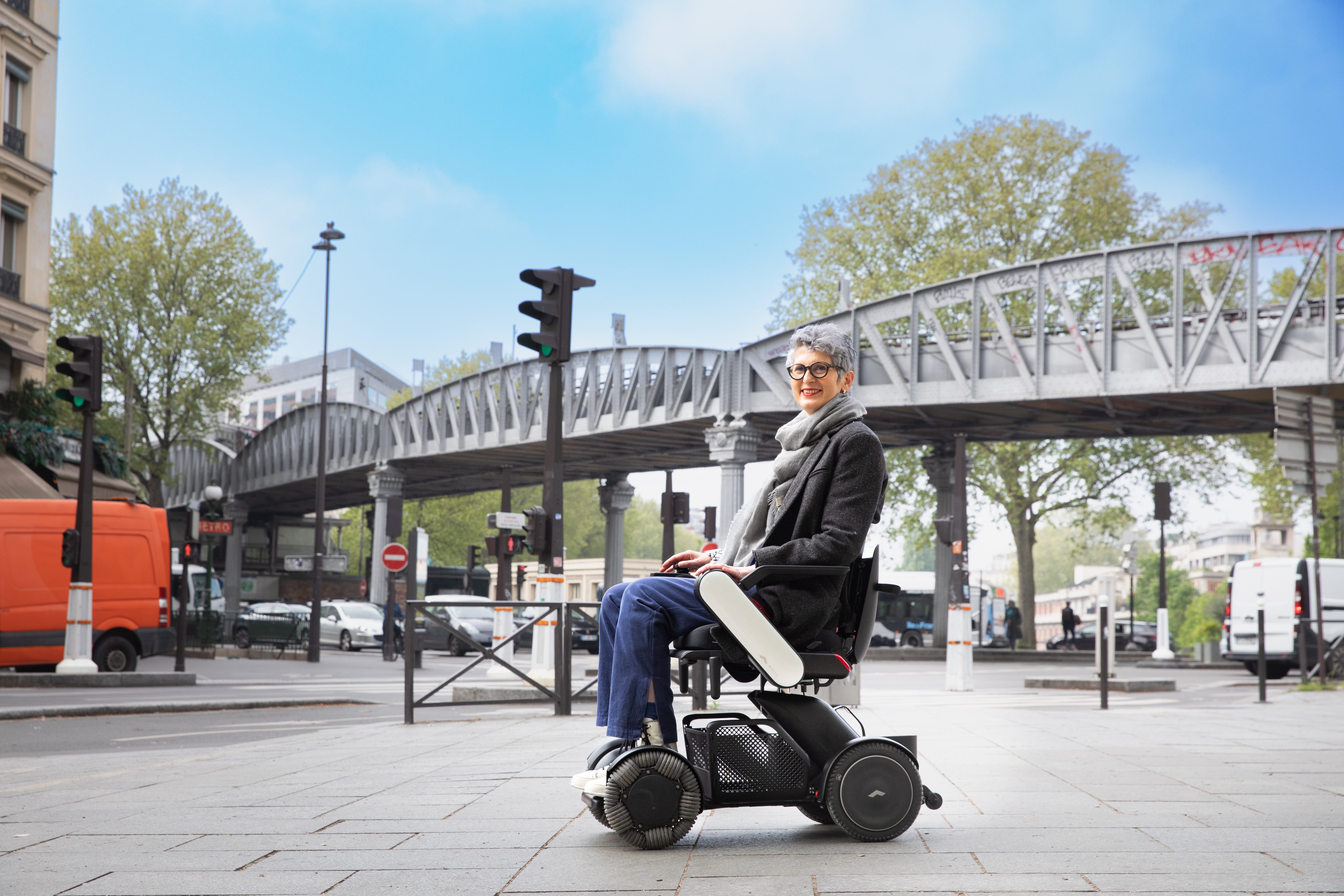

“It’s given me the freedom to do my favourite things back. Plus, I feel super cool in it.” - WHILL customer review.
Founded in 2012 by three innovators based in San Francisco and Tokyo, and backed by significant private equity investment, WHILL is considered the coolest electric wheelchair on the market.
The engineering trio, CEO Satoshi Sugie, CDO Junpei Naito, and engineer Muneaki Fukuoka have impeccable credentials, stemming from the likes of Nissan, Sony and Olympus Medical Equipment.
Woven Capital, the growth-stage corporate venture capital fund of Toyota, Daiwa Corporate Investment, Tokio Marine Holdings and the global investor Eight Roads (formerly Fidelity Ventures), amongst others, all own a stake. They are joined by the Cool Japan Fund, a public investment fund set up to promote exciting entrepreneurs pumping the Japanese economy (and yes, that’s their name).
Recently, the brand has expanded beyond devices into services by adding autonomous driving capability. WHILL power chairs have been spotted roaming airports from Miami to Munich, at the helm of AI. In total, over 700,000 autonomous WHILL rides have so far been completed at airports.
I spoke to Yuki Ban, WHILL’s VP of Strategy & Operations, to understand how the company pulls it off in creating a “super cool” brand in a distinctively senior product space.
He tapped three important brand and design considerations that he says are ingrained in WHILL’s product philosophy.
Communicate the solution, not the problem.
WHILL’s brand messaging is distinctively different from that of many agetech brands. It focuses on the solution, not the problem. In short, WHILL provides mobility; it does not “solve” disability.
Their website says: “Explore the world effortlessly with WHILL’s durable, easy-to-use electric power chairs.”
WHILL has also successfully shifted its brand positioning from a medical device to a lifestyle product. This takes guts. It is much easier to be part of an established sector, like medical, than to move the goalposts as WHILL has managed.
There is no explicit targeting of seniors.
Not only does the brand focus on the solution (mobility) rather than the problem (disability), but they also refuse to define their customers by age or limitation. As Yuki says:
“We absolutely refuse to stigmatise our customers”.
Age is certainly not ignored in the promotional material WHILL puts out, not at all - it’s just not the defining characteristic. This is a fine, but critical detail.
At the same time, WHILL focuses on authenticity in its marketing material. Yuki adds that WHILL’s promotional images always show real customers, not models. These customers appear to show genuine confidence and joy, not the cautious, medical imagery visible in traditional wheelchair adverts.

The result is imagery that feels inclusive and authentic, showing people living the good life rather than managing their limitations.
This inclusive approach translates into everything WHILL does. At Japanese airports, everyone can use the WHILL Autonomous Service, even a business person in need of quickly finishing a presentation on the laptop while rushing to a gate.
Design counts, even for the senior generation.
It is mental to imagine, but some agetech founders believe that if they add some big buttons on a device, prestó! Of course, seniors will love it.
While I am not saying that big buttons don’t sometimes have a time and a place, however, if this is your big idea of an innovative design for seniors, you have already failed.
You are more likely to turn away your target group than get them excited about your product.
WHILL thinks about their design in a very different way. Yes, their products are easy to use. But devices should always be easy to use, regardless of target group demographics. WHILL’s product design is focused on conveying enjoyment and happiness.
WHILL power chairs and scooters can be used in forward-leaning, active positions, not just in a recline. The devices are inspired by bicycles, scooters, and skateboards, and importantly, not by wheelchairs.
The company has managed to pull off what many agetech brands have not. WHILL focuses on solutions, not problems. It is a brand used primarily by seniors, but it does not stigmatise age. The designs are empowering and fun to use. Executing this and sidestepping industry norms requires courage. And if wheelchairs can be super cool, so can many other things.